Alexis reviews her experience at Smiles Peru, Lima’s premier clinic for dental tourism. Alexis traveled to Lima to receive dental treatment at Smiles Peru. In this video testimonial she shares her personal experience — from the decision to seek care abroad to her satisfaction with the results. Alexis’s Journey Like many international patients, Alexis was … Read more
All-on-4 and All-on-6 are two of the most widely used techniques for replacing a full arch of teeth with a fixed prosthesis. Both options use dental implants to support a full set of non-removable teeth, but they differ in the number of implants, bone requirements, stability, and overall treatment approach. This guide explains how the … Read more
When a crown is placed on a dental implant, there are two main ways to attach it: screw-retained or cement-retained. Both methods work well, but they are chosen in different situations depending on the location of the tooth, the aesthetic requirements, and the need for long-term maintenance. This guide explains the differences clearly so you … Read more
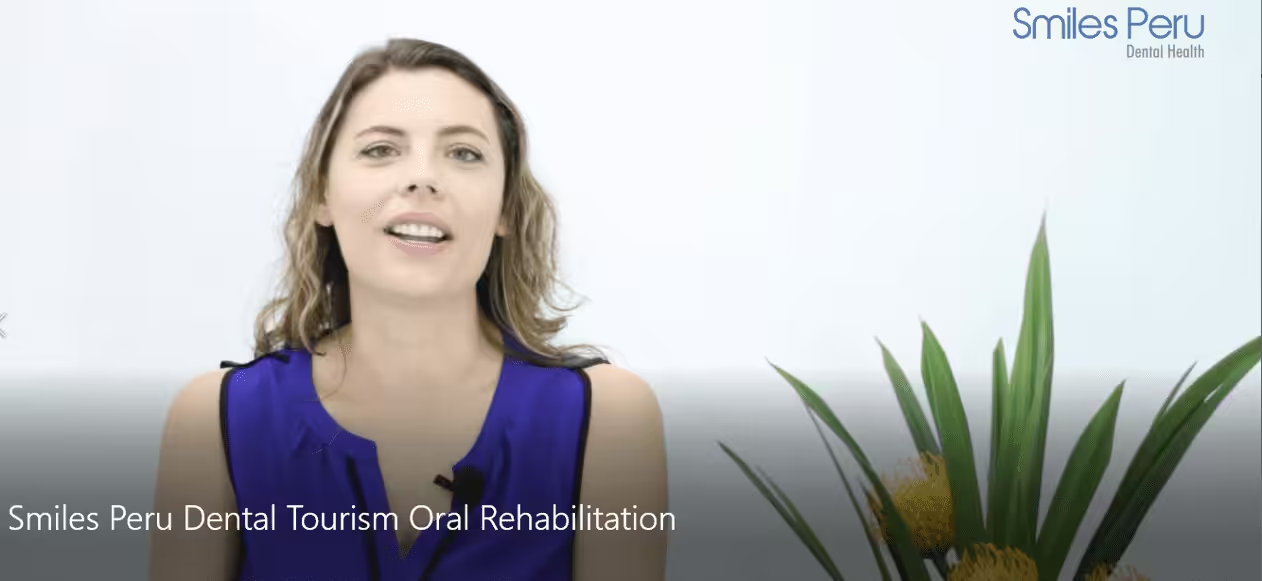
Felecia shares her experience with oral rehabilitation at Smiles Peru — without the need for braces. Felecia came to Smiles Peru seeking a way to improve her smile and bite without traditional braces. In her testimonial, she shares her experience with oral rehabilitation and the results she achieved in a focused treatment period. Oral rehabilitation … Read more
An apicoectomy is a small surgical procedure performed on a tooth that has already had root canal treatment but still has a persistent infection at the tip of the root. The goal is to remove the infected root tip and the surrounding inflamed tissue so the tooth can be preserved. It is sometimes called root-end … Read more
A guard or oclusal splint, night guard, interocclusal splint or orthopedic removable device, are a form of treatment for bruxism. This intraoral device keeps the upper and lower arch separate helping the masticatory muscles relax. The night guard is generally made of acrylic that fits to the teeth of either arch giveing an accurate contact with … Read more
Wisdom teeth (third molars) usually appear in the late teens or early twenties. In many people they erupt normally and function without problems. In others they remain partially erupted or fully impacted under the gum and bone, which can lead to inflammation, infection, or damage to the neighboring teeth. The decision to keep or remove … Read more