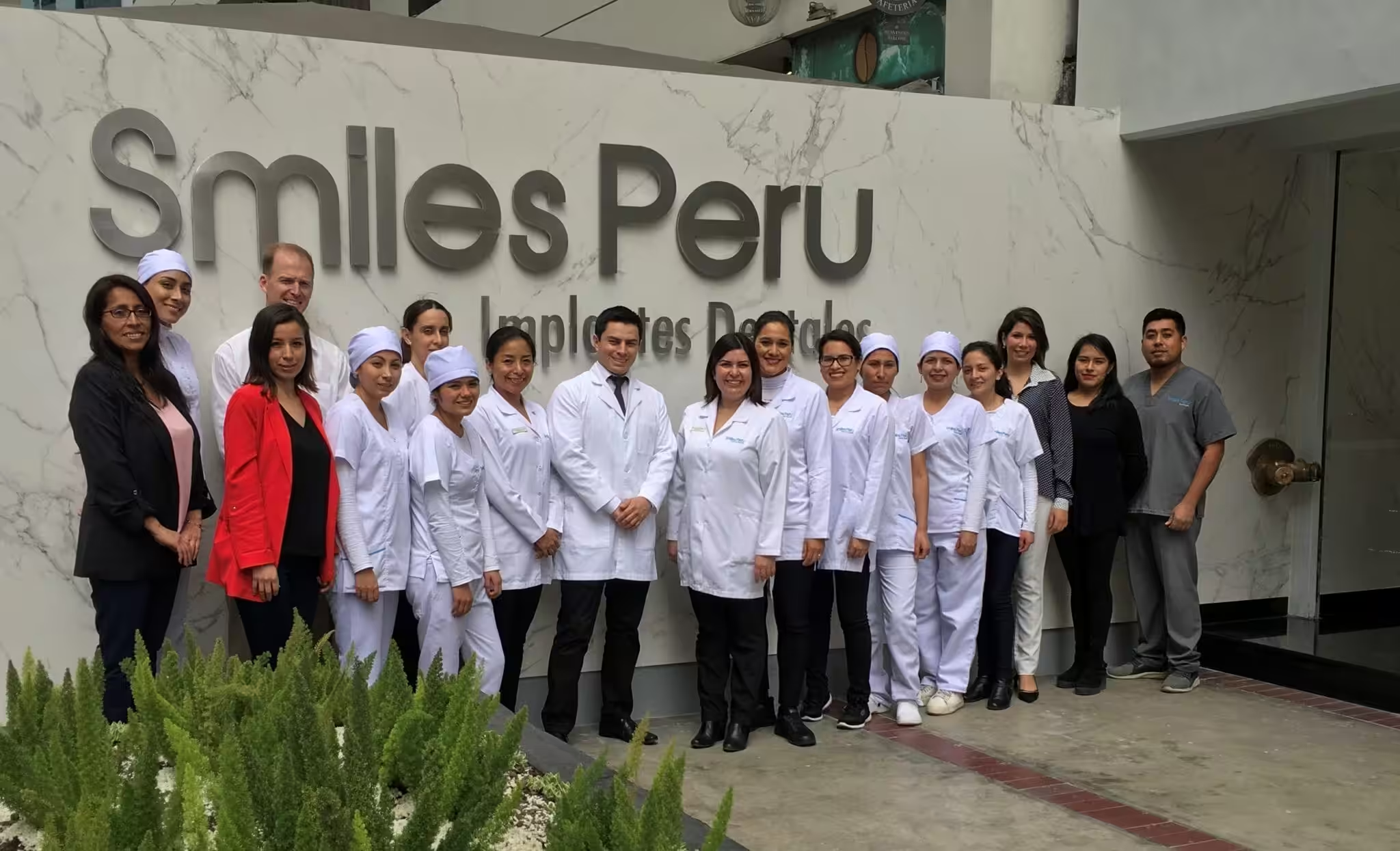
Dental Implants in Lima
Dental implants are the most reliable and natural way to replace missing teeth. At Smiles Peru, we place high-quality titanium implants that integrate with the bone (osseointegration), allowing us to restore your smile with fixed teeth that look, feel, and function like natural ones.
In the past, tooth loss meant choosing between uncomfortable removable dentures or damaging adjacent teeth to support a bridge. Today, modern implant technology, 3D planning, and advanced rehabilitation techniques make it possible to replace missing teeth with lifelike, long-lasting results—even in cases with significant bone loss.
Every implant treatment at Smiles Peru is planned and supervised by Dr. Sylvia Pflücker, our Clinical Director and specialist in Oral and Maxillofacial Radiology. Her expertise in 3D CBCT interpretation allows for more precise, safer implant placement and more predictable outcomes, whether for a single tooth or full-arch rehabilitation.
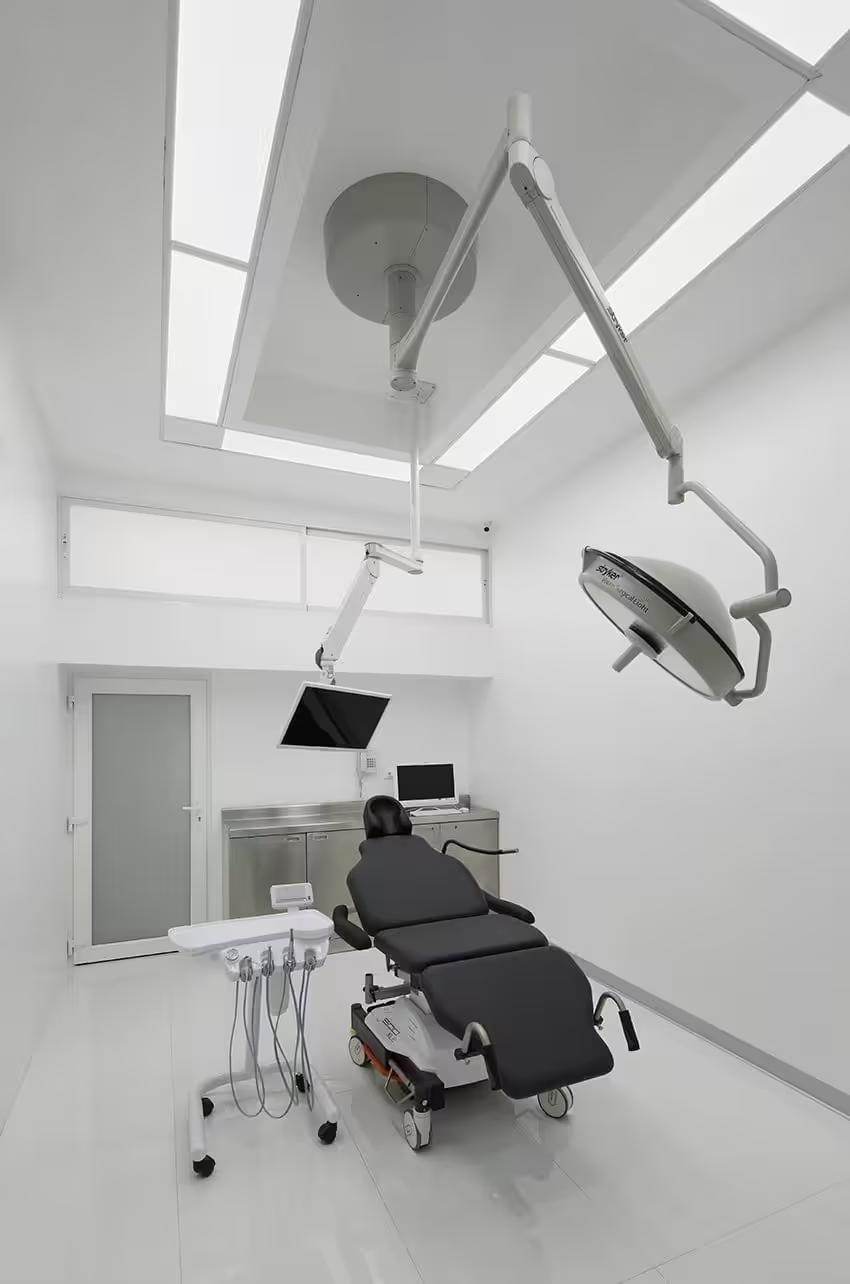
Smiles Peru Dental Implant Surgery Center
What Are Dental Implants and How Do They Work?
A dental implant is a small titanium post that is placed into the jawbone. Over a period of months the bone grows around and bonds with the implant in a process called osseointegration. Once integrated, the implant provides a stable foundation for:
- A single crown (when one tooth is missing)
- A fixed bridge (when several teeth are missing)
- A full-arch fixed or removable prosthesis (when all teeth in an arch are missing)
Because implants stimulate the bone, they help prevent the bone loss that normally occurs after teeth are extracted — something that bridges and conventional dentures cannot do.
Dental Implants vs Dental Bridges
| Aspect | Dental Implant | Traditional Dental Bridge |
|---|---|---|
| Support | Anchored directly in the bone | Supported by the neighboring teeth |
| Adjacent teeth | Left untouched | Must be prepared (ground down) |
| Bone preservation | Helps maintain bone volume | Does not prevent bone loss under the gap |
| Longevity | Can last a lifetime with proper care | Typically 10–15 years |
| Feel & function | Very close to a natural tooth | Good, but not the same |
| Long-term cost | Generally more favorable over time | May require replacement in the future |
When the neighboring teeth are healthy, an implant is usually the preferred long-term solution. When those teeth already need crowns, a traditional bridge can still be a practical and more economical option. Learn more on our Dental Bridges page.
Types of Dental Implant Treatments
We offer personalized solutions based on the number of missing teeth and bone quality:
1. Single Dental Implants (Individual Crowns) – Ideal when one, two, or three teeth are missing. We often complete the final crown in a single visit using CEREC CAD/CAM technology for precise, natural-looking results.
2. Implant-Supported Bridges – Used when several consecutive teeth are missing. Multiple implants support a fixed porcelain or zirconia bridge.
3. Full-Arch Fixed Solutions (All-on-4 and All-on-6) – The most advanced option for patients missing most or all teeth in one arch. → Learn more: Full Mouth Dental Implants – All-on-4 & All-on-6
4. Implant-Supported Removable Dentures (Overdentures) – A more economical and stable option for those with limited bone. Implants greatly improve retention and comfort compared to traditional dentures.

The Dental Implant Treatment Process
1. Diagnosis & Digital Planning (CBCT)
Success starts with proper evaluation. We use 3D CBCT imaging to assess bone volume and density in all planes. Combined with planning software, this allows us to virtually place the implants before surgery, choosing the ideal size, position, and angle for the final restoration.
2. Surgical Phase
Our maxillofacial surgeon places the implants in our dedicated Surgery Center, usually under local anesthesia. The procedure is typically straightforward, and many patients receive temporary teeth the same day or the following day. Dissolvable sutures are used in most cases.
3. Osseointegration Period
We wait 3–6 months for the implant to fully integrate with the bone.
4. Final Rehabilitation
Once osseointegration is confirmed, we place the final crown, bridge, or definitive prosthesis (hybrid or zirconia).
Hybrid or zirconia prosthesis for fully edentulous upper or lower arches – In the upper jaw, six or eight dental implants (All-on-6/8) can be placed to support a hybrid prosthesis of 10 to 12 teeth. In the lower jaw, four or six dental implants can be placed to support a hybrid or zirconia prosthesis of 10 to 12 teeth. The number of implants chosen depends on the size of the edentulous arch and the quality and quantity of available bone.
Individual crowns – These are crowns placed one by one, often in a single visit using CAD/CAM technology. They are used in short edentulous spaces to restore one, two, or up to three missing teeth, with crowns that are not connected to each other.
Fixed bridges on dental implants – These consist of connected (splinted) crowns supported by four, six, or eight dental implants.
Am I a candidate for dental implants?
Most healthy adults missing one or more teeth are good candidates. Implants are also an excellent option for people who are unhappy with removable dentures.
Even if you have been told you lack adequate bone, solutions exist. We routinely use:
- Bone grafting
- Sinus lifts
- All-on-4 techniques that maximize available bone
A 3D CBCT evaluation is the best way to determine the right approach for your case.
Dental Implant Prosthetic Options
Hybrid Prosthesis – Acrylic teeth reinforced with an internal titanium bar. Excellent strength, lighter weight, and strong value. The hybrid prosthesis is screw-retained to the implants and can restore up to 90% of natural chewing force, while providing excellent aesthetics and delivering outstanding stability, chewing function, and a natural appearance. At Smiles Peru, the hybrid prosthesis is one of our most recommended solutions for patients looking for a comfortable, long-lasting fixed alternative to traditional removable dentures.
Zirconia Implant Bridge – Maximum aesthetics and strength, ideal for those seeking the most natural-looking result. A zirconia implant bridge is a full-arch fixed restoration supported by dental implants. It is milled from a solid block of high-strength zirconia, which provides exceptional durability, excellent biocompatibility, and a highly natural appearance.
For more details about the differences between the zirconia bridge and the hybrid prosthesis, see our comparison guide here.
Why Choose Smiles Peru for Dental Implants?
- Clinical direction by Dr. Sylvia Pflücker, specialist in Oral and Maxillofacial Radiology
- Precise 3D CBCT planning for safer and more predictable results
- Experience with complex cases, including bone grafting and sinus lifts
- In-house laboratory and CEREC CAD/CAM technology
- Lifetime replacement guarantee on our dental implants (does not include crown or prosthesis)
- Corporate apartments available for comfortable recovery
- Over 25 years of experience treating local and international patients
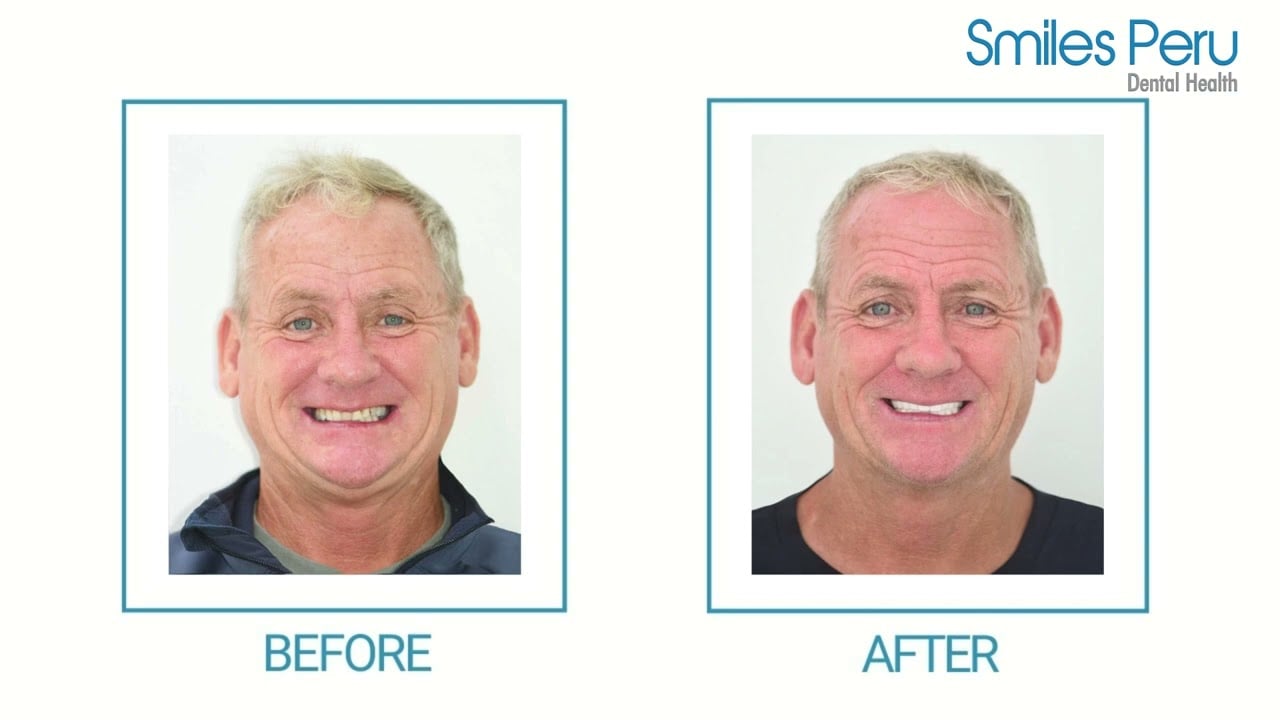
We have successfully treated many patients who were previously told they did not have enough bone for implants. Please see our dental implants case studies.
Frequently Asked Questions about Dental Implants
What are dental implants and how do they work?
They are titanium posts that integrate with the jawbone and support a crown or prosthesis that looks and functions like a natural tooth.
What if I don’t have enough bone?
Bone grafting or a sinus lift can often restore volume. We also evaluate techniques that make the most of existing bone. Every case is assessed with 3D imaging.
Is the procedure painful?
It is performed under local anesthesia. Most patients experience only mild to moderate discomfort afterward, which is easily managed.
How long does the full treatment take?
Implant placement is usually done in one or two visits. A healing period of 3–6 months follows before the final restoration. Temporary teeth can often be provided the same day.
How much do dental implants cost?
Cost depends on the number of implants, any need for grafting, and the final restoration. Send us your X-rays or CBCT for a personalized estimate. Please see our prices page for current pricing.
Do implants last a lifetime?
With good oral hygiene and regular check-ups, success rates exceed 95% in healthy bone, and many implants last decades.
Complimentary online consultation
Briefly describe your case and send us photos of your smile (and X-rays if available) to info@smilesperu.com or use our contact form. We will send you a treatment plan and cost estimate within 24 hours.
Contact Us