
Dental Implant Crowns: Screw-retained vs. Cement-retained
What type of Implant Crowns are Recommended in my Case?
Dental implantology is considered one of the greatest advancements in dental treatment, providing a definitive, safe solution that fully restores the aesthetics and function of a natural tooth while protecting adjacent teeth and helping mitigate bone loss. Dental implant rehabilitations using crowns use two types of implant crowns: screwed-retained or cement-retained. Each option uses an abutment, which is the piece that connects the crown to the implant. Abutments are always screwed-in to the implant. The crucial difference this article will address is how the crown is connected to the abutment, either through cement adhesive or screw retention.
Factors when choosing between a Screw-retained or Cement-retained Implant crown
The dental clinician must evaluate the individual case, taking into account the following factors when deciding whether to recommend a cemented or screw-retained crown.
• The patient’s occlusion.
• The prosthetic space, i.e., the height and width that the implant-supported prosthesis may have.
• If it is a single crown or a restoration of multiple implants (a bridge).
• The implant’s position in the maxilla.
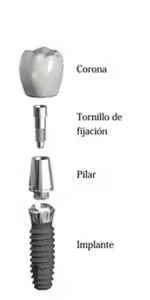
Cemented Implant Crown
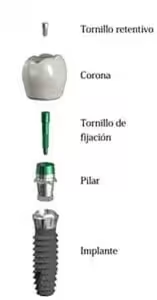
Screw-retained Implant Crown
Screw-retained Implant Crowns
The screw-retained prosthesis has a well-documented history of success applied to patients, particularly in patients with total edentulism, that is, for the rehabilitation of multiple implants as in the case of all on 4 and all on 6. Screw-retained crowns are used more frequently in the posterior sector sector due to their resistance during chewing movements and offering greater retention when fixed with a screw, as well as the reduced aesthetic requirements for posterior crowns. It is important the retaining screw be adjusted with the proper torque (adjustment force applied to the crown screw) recommended by the manufacturer, otherwise, the crown could loosen over time.
Advantages of Screw-retained Implant Crowns
- Screw-retained crowns offer greater retention through the application of force through a screw.
- The presence of cement in the sub-gingival area will be avoided since cement is not used for retention.
The chief disadvantage of screw-retained crowns is the presence of an access hole for the screw, which must be covered with a resin. The can lightly affect the aesthetics of the crown.
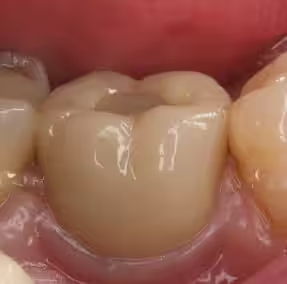
Screw-retained implant crown with resin access hole covering
Cement-retained Implant Crowns
Cement-retained crowns are those that are cemented to the implant abutment. These are typically used in the anterior area due to their needing less width than a screw-retained crown, while offering the advantage of perhaps slightly better aesthetics with no access hole requiring a resin covering.
However, their retention is reduced slightly when compared with screw-retained crowns and the use of cement carries with it the risk of residual cement remaining in the sub-gingival area. This latter risk is mitigated by careful and meticulous attention.
The decision for a screw or cement-retained implant crown depends on the clinical case planning and the judgment of the clinician in order to achieve a long-term stable and satisfactory result.
Please contact us today with questions about implant crowns.
