
What is an Apicoectomy?
Apicoectomy is a surgical procedure indicated when a tooth previously treated with a root canal, nevertheless has a resistant infectious lesion that could not be eliminated. This infection, often lodged around the root bone, is usually present through a chronic infectious process that the organism has stopped by forming a granuloma or defense tissue.
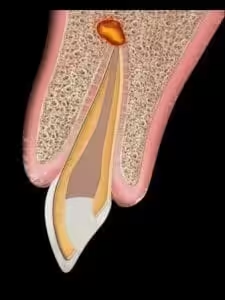
Infectious lesion present in a tooth
previously treated with a root canal
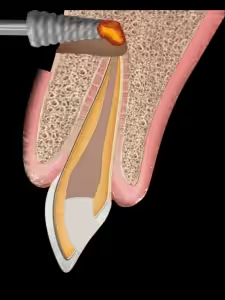
Accessing the zone with surgical instruments
When should one have an Apicoectomy?
Apicoectomy procedures are treatments to prolong the life of the tooth. The viability of the apicoectomy-treated tooth will depend on factors such as the length and location of the affected root, the type of restoration that supports it and the location of anatomical structures close to the affected area.
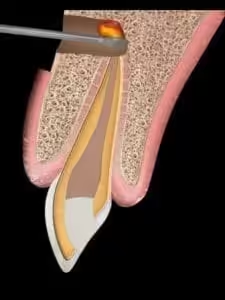
Removal of infected tissue
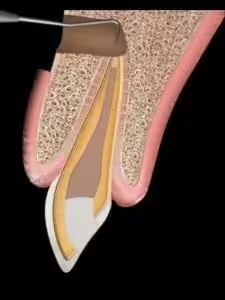
Preparation and sealing of root tip
What does an Apicoectomy consist of?
Apicectomy consists in the removal of the root portion affected by the infection and the scraping of the surrounding bone, as well as the elimination of chronic infectious tissue. For this procedure local anesthesia is placed and the tooth root tip is accessed through the gum with special surgical instruments. The gum is later closed with small stitches that will be removed after a few days of healing. After a few months the body’s healing processes will fill the empty bone space with healthy tissue and the tooth will remain intact in the mouth.
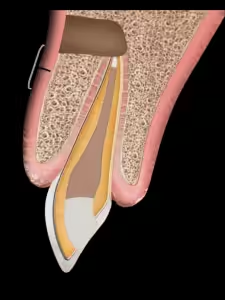
Closure and suturing of surgical
intervention area
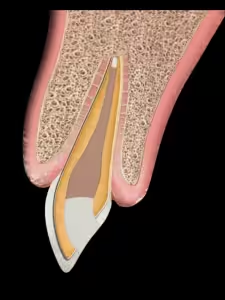
Apicoectomy successfully realized
and the body fills in bone tissue over time
