Implant-supported Removable Denture
Many patients look for a more stable alternative to conventional dentures. An implant-supported removable denture (also called an overdenture) offers a practical middle ground: significantly better retention and chewing function than a traditional denture, while remaining easier to clean and generally more accessible than a fixed hybrid prosthesis.
At Smiles Peru we plan every case with 3D imaging so the number and position of implants are chosen to give reliable support with the fewest implants necessary.
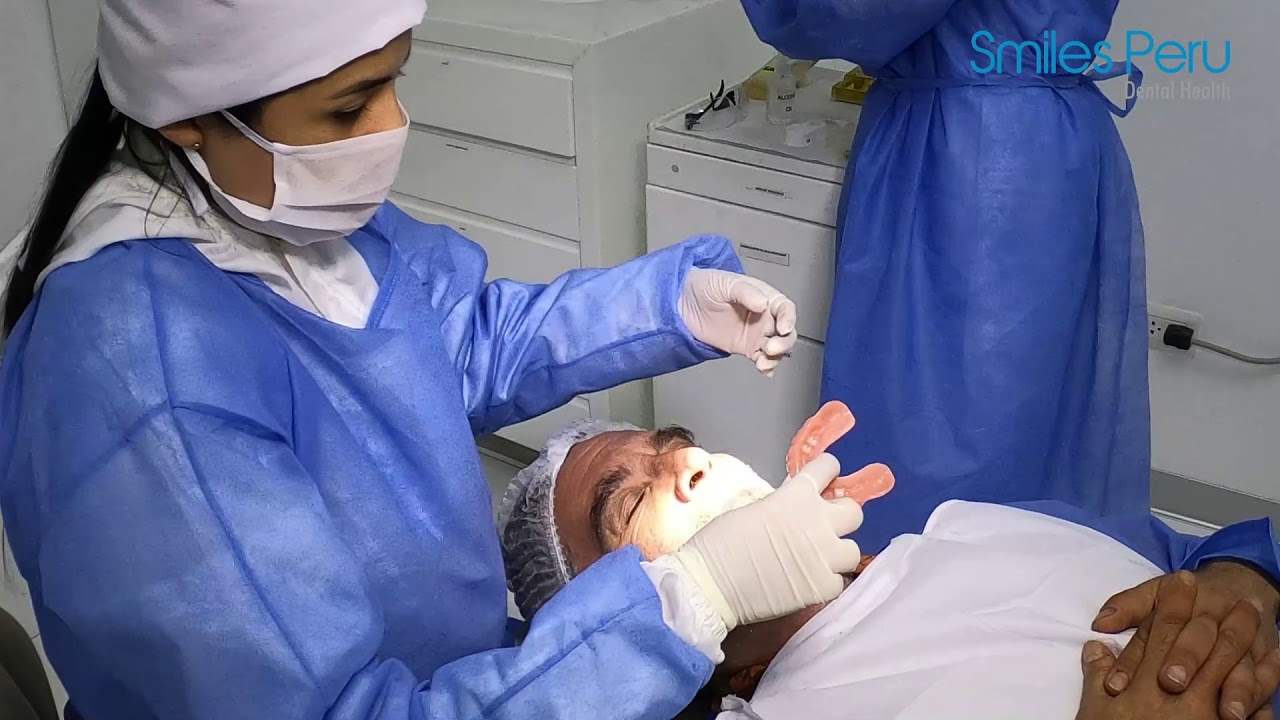
Watch the implant-supported removable denture (overdenture) process, including before-and-after results.
What is an Implant-supported Removable Denture?
Dental implants are placed in the jawbone and act as anchors. Special attachments (ball, Locator, or a metal bar) are then connected to the implants. The removable denture snaps securely onto these attachments.
Because the denture is still removable, the patient can take it out to clean both the prosthesis and the implants thoroughly. This combination of stability and easy maintenance makes the overdenture a popular choice, especially when residual bone volume is limited or when a simpler, more affordable solution is preferred.
Comparison at a glance
| Feature | Overdenture (Removable) | Hybrid Prosthesis (Fixed) | Conventional Denture |
|---|---|---|---|
| Number of implants | 2–4 (typically) | 4–6+ | None |
| Removable by patient | Yes | No | Yes |
| Retention & stability | High | Very high | Low to medium |
| Ease of cleaning | High | More demanding | High |
| Chewing efficiency | Good | Excellent | Limited |
| Cost | Moderate | Higher | Lower |
| Bone preservation | Good | Excellent | Poor |
Want a deeper technical comparison between hybrid and zirconia?
Read our full Zirconia vs Hybrid Prosthesis comparison guide →
Advantages Compared with a Conventional Denture
- Far better retention — the denture stays securely in place during speaking and eating
- Improved chewing ability and comfort
- Greater confidence and self-esteem
- Implants stimulate the bone and help slow progressive bone loss
- The denture can often be made thinner and more comfortable because it no longer relies only on the soft tissues for support
Advantages Compared with a Fixed Hybrid Prosthesis
- Requires fewer implants in most cases (typically 2–4 versus 4–6+)
- Lower overall investment
- Easier daily cleaning — the patient removes the prosthesis
- Less invasive surgery in many situations
- Still provides a marked improvement over conventional dentures
A fixed hybrid prosthesis feels more like natural teeth and offers higher chewing efficiency, but it demands more implants and more meticulous hygiene around a non-removable restoration. The overdenture is often the better balance when simplicity, cost, and ease of cleaning are priorities.
The Process for an Implant-supported Overdenture
1. Evaluation and planning
Clinical examination plus panoramic X-ray or 3D CBCT to assess residual bone and plan implant positions.
2. Implant placement
Usually 2–4 implants are placed under local anesthesia (conscious sedation available). The procedure typically takes 1–2 hours.
3. Healing and osseointegration
4The implants integrate with the bone over 3–6 months. A temporary denture is worn during this period.
4. Attachments and final impressions
Retention attachments are connected to the implants and precise impressions are taken for the custom overdenture.
5. Delivery and instructions
The finished overdenture is tried in, adjusted, and delivered. You receive clear instructions on insertion, removal, and daily care.
Types of Retention Systems for an Implant-supported Denture
We select the system according to the number of implants, residual bone, and patient preference:
- Metal bar — Maximum stability, usually chosen when more implants are available
- Ball attachments — Simple and economical
- Locator system — Excellent retention with easy maintenance; one of the most commonly used options
Frequently Asked Questions about Implant-supported Removable Dentures
What is an implant-supported removable denture (overdenture)?
A full-arch prosthesis that snaps onto 2–4 dental implants. It is far more stable than a conventional denture yet can still be removed by the patient for cleaning.
How many implants are needed?
Lower jaw: usually 2–4. Upper jaw: typically a minimum of 4 because the bone is less dense. The exact number is determined by your 3D scan.
How does it compare to a hybrid prosthesis?
The overdenture is removable and usually needs fewer implants. The hybrid is fixed (screwed in) and feels more like natural teeth, but requires more implants and more careful daily hygiene.
Is it difficult to clean?
No — this is one of its main advantages. You remove the overdenture to brush it thoroughly and clean around the implants and attachments.
Does it prevent bone loss?
Yes. The implants provide stimulation that helps reduce the progressive bone resorption seen with conventional dentures.
Can I sleep with it in?
It is generally recommended to remove the overdenture at night so the tissues can rest and so you can clean the implants properly.
How long does an overdenture last?
With good care and regular maintenance, many years. The implants themselves have a very high long-term success rate when hygiene is maintained.
What is the approximate cost?
It depends on the number of implants, the retention system, and any additional procedures needed. Send us your X-rays for a personalized outline and estimate.
Complimentary online consultation
Briefly describe your case and send us photos of your smile (and X-rays if available) to info@smilesperu.com or use our contact form. We will send you a treatment plan and cost estimate within 24 hours.
Contact Us