
All-on-4 vs All-on-6 Dental Implants: Complete Guide
All-on-4 and All-on-6 are two of the most widely used techniques for replacing a full arch of teeth with a fixed prosthesis. Both options use dental implants to support a full set of non-removable teeth, but they differ in the number of implants, bone requirements, stability, and overall treatment approach.
This guide explains how the two techniques work, the key differences between them, and how to determine which option may be more appropriate for your case.
What Are All-on-4 and All-on-6?
“All-on-4” and “All-on-6” refer to placing 4 or 6 dental implants on a single jaw (upper or lower) and using those implants to support a fixed prosthesis, such as a hybrid prosthesis or Zirconia implant bridge. The term “All-on” means that all of the teeth on that arch are supported by the implants placed — whether that number is 4, 6, or another number depending on the specifics of the case.
These techniques are particularly beneficial for patients who present with any of the following:
Remaining teeth that have a poor prognosis
Missing a significant number of adjacent teeth on the same jaw
Lack of adequate bone for a greater number of implants
Want a fixed solution instead of a removable denture
Both options allow patients to replace a full arch of teeth with a fixed, non-removable solution and avoid traditional removable dentures.
Advantages of All-on-4 Dental Implants
The main advantage of All-on-4 is lower cost, since fewer implants are used. Four implants are still enough to support a fixed prosthesis that sits above the gums, offering better comfort and stability than removable options that rely on fewer implants.
All-on-4 is also useful for patients who do not have enough bone for a greater number of implants. By angling the posterior implants, this technique can often take advantage of the denser bone in the front of the jaw and reduce the need for extensive bone grafting.
Advantages of All-on-6 Dental Implants
Placing more implants generally improves the performance of the final prosthesis. With six implants, the prosthesis is more likely to be securely screwed into place, rest less on the soft tissues, remain stable during chewing, and provide better support for the lips and facial structure.
A 2016 study published by the U.S. National Center for Biotechnology Information found that “the all-on-six approach and framework stiffer materials showed the most favorable biomechanical behavior (when compared to all-on-4).” This improved biomechanical behavior can translate into better comfort, function, and a higher probability of long-term success.
Additional implants also help stimulate the bone. The load placed on the bone helps maintain its strength and density — a principle often described as “use it or lose it.” Just as muscles weaken when not used, bone tends to deteriorate when it is not loaded.
For these reasons, Smiles Peru generally recommends at least six implants whenever it is clinically feasible.
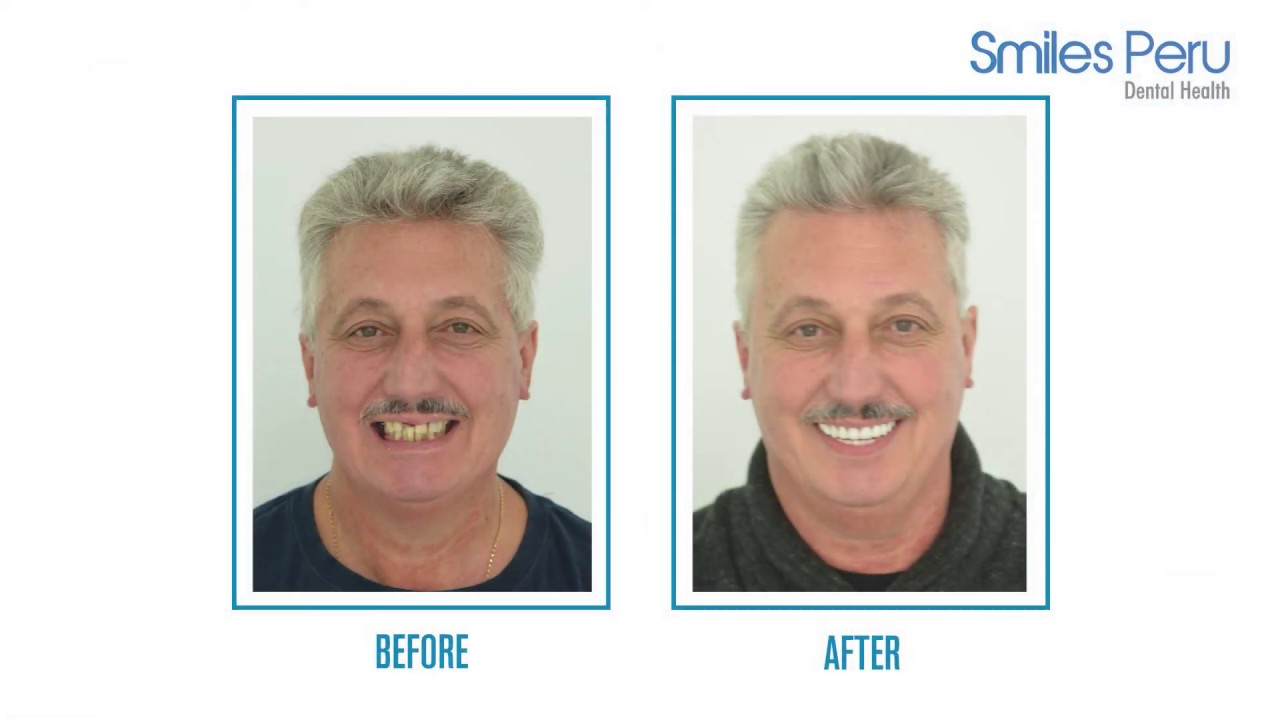
Video showing full mouth implants steps from initial consultation to diagnostic imaging, surgery, and final rehabilitation with hybrid prosthesis.
Bone Requirements and Grafting
One of the most important differences between the two techniques is the amount of bone required.
- All-on-4 is specifically designed to work in cases with reduced bone volume and frequently avoids bone grafting.
- All-on-6 generally requires more available bone. In some cases, bone grafting or sinus lifts may be recommended to place all six implants in ideal positions.
During your consultation, 3D imaging (CBCT) is used to evaluate bone volume and density so the most appropriate option can be selected.
Stability and Long-Term Performance
Both All-on-4 and All-on-6 can deliver excellent long-term results when properly planned and executed. However, All-on-6 offers a biomechanical advantage by spreading biting forces across more implants. This can be beneficial for patients with stronger bite forces or those seeking maximum long-term stability.
However, the All-on-4 remains a highly successful and widely used solution, particularly for patients who are not ideal candidates for six implants.
Cost Comparison: All-on-4 vs All-on-6
In most cases, All-on-4 is less expensive than All-on-6 because fewer implants and related components are required.
The final cost depends on several factors, including:
- Whether bone grafting or a sinus lift is needed
- The type of prosthesis used (hybrid, zirconia, etc.)
- The complexity of the case
- Whether one or both arches are being treated
As a general rule:
- All-on-4 tends to be the more cost-effective option, especially when bone grafting can be avoided.
- All-on-6 usually involves a higher investment due to the additional implants and, in some cases, more extensive preparatory work.
At Smiles Peru, we provide a detailed cost estimate after reviewing your X-rays and clinical situation so you can compare both options clearly before making a decision.
Comparison Table between All-on-4 and All-on-6
| Factor | All-on-4 | All-on-6 |
| Number of Implants | 4 | 6 |
| Bone Requirements | Lower – often avoids grafting | Higher – benefits from good bone volume |
| Cost | Lower | Higher |
| Stability | Very Good | Excellent |
| Force Distribution | Good | Better |
| Best Suited for | Patients with Reduced Bone | Patients with Adequate Bone Volume |
Who Is a Better Candidate for Each Option?
All-on-4 may be more appropriate when:
- Bone volume in the posterior jaw is limited
- Avoiding bone grafting is a priority
- A more cost-effective fixed solution is needed
All-on-6 may be more appropriate when:
- There is sufficient bone to place six implants
- Maximum stability and force distribution are desired
- Long-term durability is a primary goal
The final decision should always be based on clinical findings rather than preference alone.Both All-on-4 and All-on-6 are effective solutions for restoring function and aesthetics. Four implants on one arch should be considered the minimum for a fixed prosthesis that does not need to be removed at night. More than four implants usually provide better comfort and functional benefits, but four implants can still deliver a high level of function and aesthetics for many patients. The final recommendation should be based on a detailed clinical evaluation and 3D imaging (CBCT), rather than on preference alone.
How to Decide Between All-on-4 and All-on-6
The better option depends on several factors, including:
- Quantity and quality of available bone
- Bite force and functional demands
- Overall health and healing capacity
- Budget and treatment goals
A detailed clinical examination and 3D imaging are the most reliable way to determine which technique offers the best balance of stability, function, and long-term success for your specific case.
Frequently Asked Questions
Is All-on-6 better than All-on-4? All-on-6 generally offers better biomechanical stability because more implants share the load. However, All-on-4 is still an excellent and widely used solution, especially for patients with limited bone.
Can All-on-4 avoid bone grafting? In many cases, yes. The angled placement of the posterior implants is specifically designed to make use of available bone and reduce the need for grafting.
How many implants are recommended? Four implants is generally considered the minimum for a fixed full-arch prosthesis. When bone volume allows, six implants are often preferred for improved support and long-term stability.
Which option lasts longer? Both can last many years with proper care. Long-term success depends more on planning, implant position, oral hygiene, and regular maintenance than on the number of implants alone. That said, All-on-6 has a structural advantage in force distribution.
How do I know which option is right for me? The best way is through a clinical evaluation and 3D imaging (CBCT). This allows us to measure your bone and recommend the most predictable solution for your case.
Next Steps
If you are considering full-arch dental implants, you can review our full mouth dental implants page and our case studies and testimonials.
You may also start with a complimentary online consultation by sending us your X-rays and photos. We will evaluate your case and provide a clear recommendation along with a cost estimate.
